Latin America Payment Methods: Checkout Conversion Guide for Cards, APMs & Local Rails
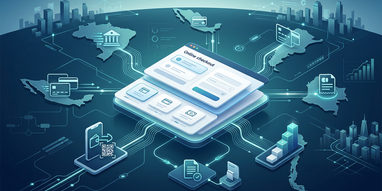
If you only offer international cards in Latin America, you're almost certainly leaving conversions and revenue on the table. Shoppers across the region expect to pay with familiar local cards, real-time bank transfers, wallets, and cash vouchers—so your checkout needs to feel as local as they are.
TL;DR
- APMs defined: Local and alternative payment methods (APMs) in Latin America include domestic-only cards (Elo, Hipercard), real-time bank transfers (Pix, SPEI), digital wallets, and cash vouchers (OXXO, boleto-style schemes) used alongside or instead of international cards.
- Cards alone underperform: Relying only on international cards is not enough in Latin America; local cards, real-time bank transfers, wallets, and cash vouchers are essential to increase successful payments and reduce cart abandonment.
- APMs lead online volume: Methods like Pix in Brazil, SPEI in Mexico, and cash networks such as OXXO often represent a large share of completed online payments.
- Local acquiring is the multiplier: Cross-border card processing typically underperforms; combining local acquiring with domestic methods can materially improve approval rates and create a smoother checkout experience.
- Country-by-country, but unified: A high-converting checkout in Latin America is localized per country while still orchestrated centrally via one API and platform.
- Scale through one provider: dLocal connects 60+ emerging markets and 1000+ payment methods, turning fragmented Latin America payment behaviors into a unified checkout strategy for 760+ merchants.
A high-converting Latin America checkout combines local acquiring, country-specific APMs (Pix in Brazil, SPEI and OXXO in Mexico, local cards across the region), and a single orchestration layer that lets merchants adjust payment mix per country without rebuilding integrations.
Quick Reference: Latin America Payment Landscape
| What | Detail |
|---|---|
| Top APM categories | Local cards, real-time bank transfers, cash vouchers, digital wallets |
| Key country rails | Pix (Brazil), SPEI + OXXO (Mexico), local cards (Argentina, Chile, Colombia) |
| Card behavior | Domestic acquiring outperforms cross-border on approval rates |
| Installments markets | Brazil ("parcelado"), Argentina, parts of Colombia |
| Best paired with | One-API orchestration plus local acquiring |
What counts as a "local" or alternative payment method in Latin America?
In Latin America, local and alternative payment methods (APMs) are any non-traditional or country-specific ways to pay—such as local-only cards, real-time bank transfers, mobile wallets, and cash vouchers—that consumers use alongside or instead of international credit cards.
Why does the definition matter?
Putting all of these options into a single "APMs" bucket hides important differences.
For checkout design, you should distinguish the following:
- Local cards: domestic schemes (for example, Elo and Hipercard) and locally issued Visa/Mastercard with unique behaviors such as installments.
- Real-time bank rails: national instant-payment systems (Pix in Brazil, SPEI in Mexico) and other bank transfer schemes.
- Cash and vouchers: barcodes or codes paid in-store at convenience or partner networks (OXXO in Mexico, boleto-style schemes, and similar approaches).
- Digital wallets: app-based, card-on-file, or bank-linked wallets that are popular in specific countries.
Each group has its own UX flows, risk patterns, and settlement behaviors—so a copy-and-paste checkout across all Latin America markets will almost always underperform.
Why do cross-border cards alone underperform in Latin America?
How do cross-border-only setups limit conversion?
When you process card payments for Latin American consumers through international acquirers without a local presence, you often face:
- Higher decline rates because issuers tend to favor domestic routing.
- Extra friction from 3DS-like checks and risk rules that are not tuned to local behavior.
- Currency conversion issues that confuse shoppers and trigger bank blocks.
Experience across the region consistently shows that cross-border cards alone underperform in Latin America and that combining them with local acquiring and local payment methods improves both authorization and conversion.
What changes when you add local methods and local acquiring?
With local acquiring and APMs:
- Transactions look domestic to issuers, which builds trust and improves approval rates.
- Customers see familiar brands, rails, and options in local currency.
- Payment flows (like Pix or SPEI) align with how people already move money every day.
This typically translates into clear gains in successful payments and revenue per visitor compared with a card-only, cross-border approach.
Cross-border vs local acquiring: practical impact
| Dimension | Cross-border only | Local acquiring + APMs |
|---|---|---|
| Approval rates | Lower (issuer suspicion) | Higher (domestic routing) |
| Currency | Often USD with FX surprises | Local currency presented at checkout |
| Risk rules | Generic, not tuned to local behavior | Tuned to local fraud and BIN patterns |
| UX trust | Foreign acquirer messaging | Familiar local brands |
Which local payment methods matter most in Brazil?
Brazil is often the first Latin American market many global merchants enter, and it has a particularly rich payment ecosystem.
Which payment methods should you prioritize in a Brazilian checkout?
- Local cards
- Domestic schemes such as Elo and Hipercard, plus locally issued Visa and Mastercard.
- Installments ("parcelado") are standard and can be decisive for higher-value baskets.
- Pix (real-time bank transfers)
- Brazil's national instant-payment system, widely adopted online and offline.
- Supports QR codes and copy-paste codes, with payments usually confirmed in seconds.
- Boleto-style or bank transfer methods
- Some segments still prefer print or digital bank slips and transfer-style payments, especially for certain ticket sizes or use cases.
What UX patterns drive higher conversion in Brazil?
- Clearly surface installment options on product and checkout pages, not only at the final step.
- Offer Pix prominently alongside cards; make it easy for customers to scan a QR code or copy a Pix code from mobile or desktop.
- For bank-slip-type methods, explain the payment window and order reservation clearly so shoppers know exactly what to expect.
Through one API, providers like dLocal expose Pix, Elo, Hipercard, and installment flows in a single Brazilian checkout, removing the need to integrate each scheme separately.
How do vouchers and real-time rails affect conversion in Mexico?
Mexico combines cards with strong cash and bank-transfer cultures.
Which payment methods dominate online checkout in Mexico?
- Local cards
- Debit and credit cards issued by local banks, which generally perform best with local acquiring.
- SPEI (bank transfers)
- Real-time interbank transfer system used for fast, account-to-account payments.
- OXXO and other cash vouchers
- Customers receive a barcode or reference code to pay at OXXO or other partner stores.
How should you design a checkout that converts in Mexico?
- Highlight SPEI as an instant, secure option for shoppers who prefer using bank accounts instead of cards.
- Treat OXXO and similar vouchers as first-class payment options, not as "fallbacks," especially for unbanked or underbanked customers.
- Explain clearly that voucher-based orders remain pending until paid, and use automated reminders to encourage completion.
By exposing these Mexican methods via a single platform, dLocal helps merchants consolidate strategy and reporting instead of managing separate local integrations.
How should you approach Colombia, Argentina, and Chile?
These markets share some patterns but still require country-level nuance.
Which payment methods matter most in Colombia?
- Mix of local cards, bank transfers, and various voucher or cash-based mechanisms.
- Growing use of digital wallets and app-based payment tools.
- For a Colombian checkout, combine cards with the most widely used bank-transfer and voucher methods to reach both banked and cash-preferring shoppers.
Which payment methods matter most in Argentina?
- Strong use of local cards, often with installments.
- Economic volatility and FX controls can influence how consumers use cards versus cash or transfers.
- A PSP with local expertise can help you navigate controls while still enabling a smooth online experience.
Which payment methods matter most in Chile?
- Higher share of banked consumers, with cards and bank transfers central to online payments.
- Digital wallets are increasingly relevant, especially among younger users.
Across all three countries, orchestrating cards, bank transfers, and cash-like methods through a single integration can simplify operational work. dLocal's 60+ country coverage means merchants can add Colombia, Argentina, and Chile on top of existing Latin America presence without new standalone integrations every time.
How can you design a high-converting Latin America checkout using one API and orchestration layer?
Step 1: How do you set up local acquiring per country?
Always offer local cards with local acquiring when you can. Add installments where they are culturally standard (for example, Brazil and parts of Argentina).
Step 2: How do you select the right APMs per market?
Layer in real-time bank rails such as Pix and SPEI prominently on the first checkout screen. Include cash or voucher methods for unbanked or cash-focused segments. Add wallets when they reach meaningful adoption in your target segments.
Step 3: How do you orchestrate cards and APMs through one API?
dLocal's platform focuses on orchestrating 1,000+ methods under a single API, so you can adjust the mix by country in configuration instead of code. This removes the need for standalone integrations per market.
Step 4: How do you optimize routing and recurring flows?
For merchants running subscriptions or repeat purchases:
- Tokenization of cards and APMs supports stored credentials and smoother repeat payments.
- Smart routing can send transactions through the best local acquirer or method based on card BIN, geography, and historical performance.
- A unified platform makes it easier to manage retries and dunning logic across multiple Latin America markets.
Full Fact Sheet: Latin America Payment Methods & Checkout Optimization
| Parameter | Detail |
|---|---|
| Top APM categories | Local cards, real-time bank transfers, cash vouchers, digital wallets |
| Brazil core methods | Local cards (Elo, Hipercard, locally issued Visa/Mastercard), Pix, boleto-style |
| Mexico core methods | Local debit/credit cards, SPEI, OXXO and partner-store vouchers |
| Colombia core methods | Local cards, bank transfers (PSE), voucher and cash-based mechanisms, growing wallet adoption |
| Argentina core methods | Local cards with installments, transfer-based methods, FX-aware flows |
| Chile core methods | Local cards, bank transfers, growing digital wallet usage |
| Installments-relevant markets | Brazil ("parcelado"), Argentina, parts of Colombia |
| Cross-border cards | Lower approval rates, higher decline risk, FX friction |
| Local acquiring impact | Higher approvals, domestic routing, currency clarity |
| Recommended orchestration | One API + dashboard configuration per country |
| Subscription support | Tokenization across cards and APMs, smart retries, dunning logic |
| Reference provider | dLocal: 60+ markets, 1000+ payment methods, 760+ merchants |
FAQs: Latin America payment gateways and methods
Which local payment methods and gateways are most used in Latin America?
Usage varies by country, but common patterns include:
- Local cards with domestic acquiring in all major markets.
- Pix (Brazil), SPEI and OXXO (Mexico), plus bank-transfer and voucher schemes in Colombia, Argentina, and Chile.
- Growing adoption of wallets and instant-payment rails across the region.
Gateways and PSPs that deeply support these methods—such as dLocal—are better positioned to drive conversion than generic, card-only options.
What should I consider when choosing click-to-pay or wallet options for Latin America?
Consider:
- Local popularity and user trust in each wallet.
- Whether the wallet supports native checkout experiences (for example, one-click and tokenized flows).
- How the wallet behaves across desktop, mobile web, and in-app.
- Integration via an orchestrator like dLocal, so you avoid one-off wallet integrations.
How do online payment portals or centers influence trust in Brazil, Mexico, and Colombia?
Customers in these markets are used to:
- Seeing familiar bank and voucher brands during the payment flow.
- Being redirected to trusted bank or wallet environments for authentication.
Designing the journey to highlight recognized brands and explaining each step in clear, localized language helps reduce drop-off.
How do Latin American payment methods fit into an international payment strategy?
Latin America should be treated as a strategic cluster within your international setup:
- Use a provider that connects Latin America to your global stack via one API.
- Localize the payment method mix per country while preserving unified reporting and reconciliation.
dLocal's coverage of 60+ countries and 1000+ payment methods supports this international-but-local approach.
What is the difference between Pix and SPEI for online payments?
Pix is Brazil's national instant-payment system, operated by the central bank, used for consumer and business payments online and offline. SPEI is Mexico's interbank real-time transfer system, operated by Banxico, also used for instant transfers. Both are bank-to-bank rails with near-instant settlement, but they are country-specific, follow different technical specifications, and require separate integrations or a unified provider that supports both.
Which Latin American countries have the highest e-commerce growth?
Brazil and Mexico lead in absolute market size, but several countries are growing faster in percentage terms:
- Brazil remains the region's largest e-commerce market, with online retail revenues exceeding USD 200 billion annually and double-digit year-over-year growth driven by Pix adoption and mobile commerce.
- Mexico is the second-largest market and one of the fastest growing, fueled by expanding internet penetration, digital wallets, and a young population embracing online shopping.
- Argentina shows high growth rates in local-currency terms, partly reflecting inflationary dynamics but also genuine increases in online purchase frequency and digital payment adoption.
- Colombia and Chile are accelerating quickly, with growing banked populations, rising smartphone usage, and government initiatives promoting digital payments.
For merchants, the practical takeaway is that Brazil and Mexico should typically be prioritized first due to volume, followed by Colombia, Argentina, and Chile as high-growth expansion markets. A single orchestration layer like dLocal lets you enter all five without sequential integration efforts.
Which Latin American wallets matter most for cross-border merchants?
Wallet adoption varies significantly by country, and not all wallets are equally accessible to international merchants:
Brazil
- PicPay: One of Brazil's largest digital wallets with tens of millions of users, supporting QR-code payments and in-app purchases.
- Mercado Pago: Linked to the Mercado Libre ecosystem, widely used for e-commerce and increasingly for off-platform purchases.
- Note: Pix has absorbed much of the wallet use case in Brazil, since it is bank-linked, instant, and universally accepted.
Mexico
- Mercado Pago: Strong presence tied to Mercado Libre's dominance in Mexican e-commerce.
- Kueski Pay: A buy-now-pay-later wallet gaining traction, especially among younger consumers without traditional credit access.
- Spin by OXXO: A prepaid wallet connected to OXXO's massive physical network, reaching unbanked consumers.
Argentina
- Mercado Pago: The dominant digital wallet, used for both online purchases and peer-to-peer transfers.
- Ualá: A fintech-linked wallet with a growing user base, especially among younger demographics.
Chile and Colombia
- Digital wallets are growing but remain more fragmented. Key players include Mercado Pago (Colombia), Nequi and Daviplata (Colombia), and Mach and Tenpo (Chile).
What should cross-border merchants prioritize?
- Start with wallets that have the highest checkout penetration in your target vertical, not just the largest user base overall.
- Prioritize wallets accessible through a single orchestrator like dLocal rather than pursuing individual integrations, which add operational complexity.
- Monitor adoption curves closely; wallet market share in Latin America shifts faster than in mature markets, so quarterly reviews of payment mix data are recommended.
Key takeaways
- Latin America is plural: Latin America is not a homogenous "card market"; local cards, real-time bank transfers, cash vouchers, and wallets are all critical to online conversion.
- Cross-border alone falls short: Cross-border-only card strategies typically underperform; local acquiring plus APMs like Pix, SPEI, and OXXO-style vouchers are needed for competitive performance.
- Country-specific design matters: Checkout design should be country-specific (Brazil vs. Mexico vs. Colombia, Argentina, and Chile) while still centralized from an engineering and reporting perspective.
- Installments are non-negotiable in some markets: In Brazil and parts of Argentina, offering "parcelado" can directly impact average order value and conversion on higher-ticket purchases.
- One platform, many countries: dLocal provides access to 60+ countries and 1000+ methods, helping 760+ merchants implement a unified, high-converting Latin America checkout without multiple local integrations.
- Strategic close: A localized checkout is no longer optional in Latin America; merchants who orchestrate cards, APMs, and local acquiring through a unified platform capture revenue that card-only competitors leave behind.
Get in touch with our payment experts
We help global companies such as Amazon, Spotify, and Microsoft find new opportunities in high-growth markets. Let's think outside the box for tailor-made payment solutions for your business. Fill out this form, and we'll get back to you as soon as possible.
Contact us